Ngày đăng: 22/04/2019
People today tend to attach human traits to non-human things – we all know the arrogant rabbit, the humble turtle. Brands are no exception, they are assigned the characteristics of a person and above all, a true personality.
According to psychologist Carl Jung, there are twelve characters that exist in our unconscious minds. Like so many other theories of psychology, Jung’s ideas have been developed in business and marketing circles. That led to the idea of twelve brand models – that is, one brand personality can be one of twelve characters. Each character possesses a set of characteristics that clearly describe the brand personality:
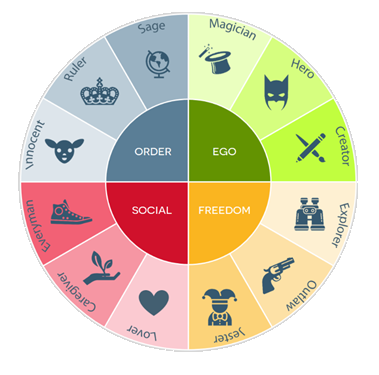
It’s easier to understand with an example like Apple, forget about products and just think about Apple’s personality and how Apple helps you feel it. Apple’s personality is imagination, innovation, passion, creativity and charisma. Apple’s brand model is the Magician. Johnson & Johnson’s personality is caring, trusting, protective and loving. And the model of Johnson & Johnson, is Caregiver. Some brands offer more care than others to develop and maintain their brand personality. Carol Pearson and Margaret Mark, authors of books on brand models, say that the most successful brands often have clear, consistent and easily recognizable patterns.
A strong, clear brand personality allows the brand to stand out from other competitors. Take Apple as an example again. Apple created computers and so did hundreds of other brands. But Apple has differentiated itself, differentiating it from its competitors by providing a brand with innovative, renovating, modern, passionate personality. A brand can differentiate itself from competitors not in the products or services it provides, but in its personality, and this can be an important selling feature.
By creating and introducing a certain personality, you can attract a certain number of consumers. Different people will like different characteristics, which is exactly why Mr. A’s personality attracts B’s friends and not C’s. For some, characteristics like creativity and imagination will attract them, but others are intrigued by rebellion and wilderness. Consumers will be attracted by brands that show characteristics that they value, find interesting or want to own. If your brand personality shows strength, confidence, elegance and a hint of quintessence (like Rolex), you’ll attract customers who appreciate and want to live in that style. If you want to target people who prefer environmentally friendly styles, the best brand personality is to focus on innocence, honesty, optimism and honesty.

If your brand personality is consistent and clear, it can help you convey a clear message about who you are, what you’re offering and how you deliver it. This means that consumers can understand you better. They will understand what to expect from you, about products, practices and services. This leads to increased brand awareness.
We must have met people who didn’t have a clear personality, and you couldn’t really connect with them. Because people connect with each other through personalities, and this is true of both people and brands. Having a brand personality will help customers who value you have the opportunity to form connections with you, so that they feel like they know you well. Customers will be from a brand they feel they know and trust.
A strong brand personality can make consumers feel something. It can help them feel safe, excited, confident, seductive, rebellious. And the important thing is that people often don’t buy things logically, but with the emotions they feel they receive.
If consumers feel connected to a brand and its personality makes them feel a positive thing, they are more likely to become loyal to the brand. And a survey of over 24,000 consumers in the UK shows that 65% of them say that once they find a favorite brand, they will tend to stick with it long term.
When people feel connected to a brand, they are likely to buy from that brand, but it’s not simply about the product. When they feel that they understand and know the brand, when the brand personality is all they value, is everything they want to be, they are not just buying the product, they are buying the brand themselves. Think about Mercedes-Benz – they have spent many years proud of the Ruler model with outstanding, controlling, leadership personalities. When people buy a Mercedes, they are not just buying a car, they are buying a personality brand and they want to be part of the Mercedes-Benz club.
Recognizing all the benefits of a strong, clear brand personality, brands have invested a lot of time, money and effort into it. However, what they often forget to do is to check how their brand personality is perceived by people. In fact, a brand personality is not something you create, but what others feel. In the best case, the two things overlap and the brand will get many benefits. Worst case, they aren’t really the same – you’re trying to show a certain personality but it feels like a different personality. This creates problems between consumers and brands – consumers have realistic expectations about products, prices and services but are not exactly met by the brand. Consumers may begin to feel the brand promises things they do not deliver. Brands are starting to find themselves attracting customers they didn’t expect. Consumers may think this brand is pretending to be something it really isn’t.
